How to Mix Basics for Street Style Outfits for Endless Chic Combinations
 By VelvetNesty
The secret to a street style wardrobe that feels expensive and intentional rarely lies in buying trendy items every season. Instead, it rests on the skill of curating a foundation of high-quality essentials and applying specific styling rules to create outfits that feel curated rather than accidental. When you master the art of pairing simple garments, you remove the “nothing to wear” frustration that plagues full closets.
Learning how to mix basics for street style outfits requires shifting your focus from individual pieces to the interaction between texture, proportion, and silhouette. By treating your wardrobe like a puzzle where every piece fits with the others, you create a sustainable rotation of outfits. This guide outlines the mechanics of styling these foundational items so you can generate professional-level outfits using pieces you likely already own.
The Foundation: Selecting Quality Basics
A functional wardrobe starts with garment longevity. If your base layers are thin, pilled, or poorly fitted, the entire ensemble loses its shape. Focus on these three categories to anchor your collection:
- The Structural Pieces: A crisp cotton poplin shirt, a heavyweight jersey t-shirt, and a structured blazer. These provide the “frame” for your outfit.
- The Bottoms: One pair of straight-leg raw denim, a pair of tailored wool-combine trousers, and a black midi skirt.
- The Textural Elements: A chunky cable-knit sweater, a silk camisole, or a high-quality cashmere cardigan.
When shopping, check fabric labels. Prioritize natural fibers like cotton, wool, silk, and linen. Synthetic materials often fail to drape properly, which is the primary reason an outfit might appear “cheap” even if the individual items were costly.

Step 1: Mastering Proportion and Volume
The biggest mistake when styling basics is wearing all loose or all tight items. The most effective street style combinations play with contrast.
If you choose an oversized bottom—like wide-leg trousers—balance the look with a slim-fitting top, such as a tucked-in ribbed tank or a fitted bodysuit. Conversely, if you wear a loose-fitting “boyfriend” shirt or a bulky knit sweater, pair it with slim or straight-cut bottoms to create a clean line.
Proportion Checklist:
* The Rule of Thirds: Avoid splitting your body exactly in half. Aim for a 1/3 to 2/3 ratio. A tucked-in shirt creates this visual break, making legs appear longer.
* Volume Balancing: If the top is oversized, keep the bottom lean. If the bottom is heavy or baggy, keep the top streamlined.
Step 2: Utilizing Texture as a Visual Tool
When your color palette is neutral, texture is the only thing preventing your outfit from appearing flat. Mixing materials allows you to wear an all-black or all-beige outfit while maintaining visual interest.
Combine fabrics with different light-reflecting properties. For example, pair a matte cotton t-shirt with a pair of leather trousers. The contrast between the soft, absorbent cotton and the smooth, reflective leather adds depth. Similarly, layer a heavy wool coat over a lightweight silk dress. Even if the colors match perfectly, the difference in how light hits each fabric creates a multi-dimensional look.

Step 3: The Power of the “Third Piece”
Many individuals wear a top and pants and stop there. To move into professional street style territory, you need a “third piece.” This item acts as the anchor that pulls the look together.
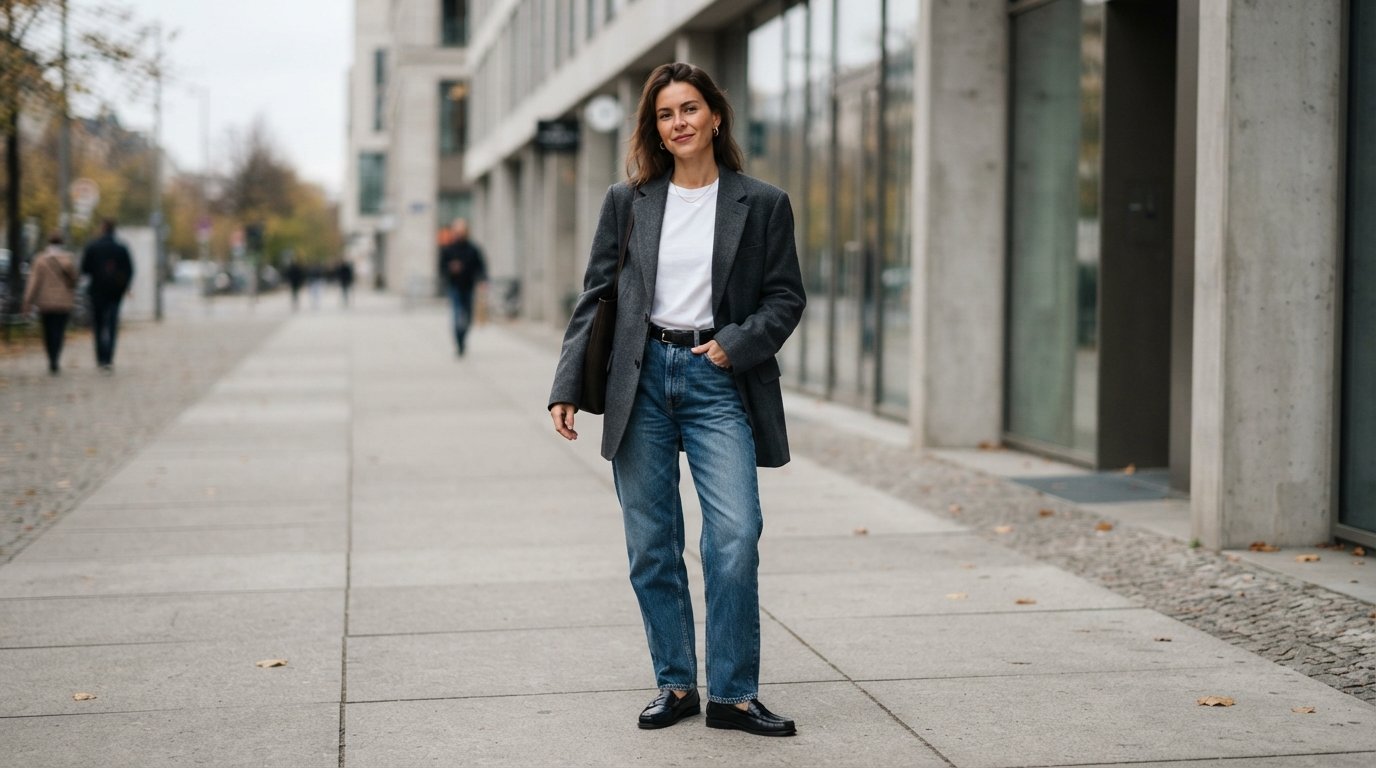
- The Blazer: Instantly adds structure to a casual t-shirt and jeans.
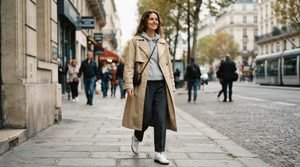
- The Trench Coat: Provides a polished layer over hoodies or basic knits.
- The Statement Vest: A sleeveless blazer or knit vest can change the shape of your upper body without the bulk of a full jacket.
The third piece does not have to be heavy. In warmer weather, a button-down shirt worn open as a light layer functions perfectly as a third piece over a tank top.
Common Mistakes to Avoid
- Ignoring Tailoring: A basic garment that fits poorly ruins a look. A trip to a local tailor to hem your trousers or shorten a blazer sleeve transforms a mid-range garment into a high-end piece.
- Over-Accessorizing: When mixing basics, let the clean lines do the talking. Stick to one or two classic accessories—a gold watch, a leather belt, or a structured handbag—rather than piling on busy jewelry.
- Ignoring Footwear Clashes: Your shoes dictate the formality of the outfit. A pair of white sneakers makes tailored trousers feel like street style, while a pair of block-heel boots makes that same trouser set feel ready for an office environment. Match your footwear to the vibe you want to project.

Budget Tips for a Basic-Focused Wardrobe
You do not need a luxury budget to build this collection.
- Second-Hand Hunting: High-quality wool coats and blazers from decades past often feature superior construction compared to modern fast-fashion alternatives. Thrift stores are goldmines for these items.
- Cost-Per-Wear Calculation: Before purchasing, ask yourself if you can wear the item in at least four different combinations with pieces you already own. If the answer is no, skip it.
- Maintenance: Invest in a fabric shaver to remove pilling from sweaters and a high-quality garment steamer. A crisp, lint-free garment looks more expensive than a wrinkled designer one.

Conclusion
Creating a signature street style is about consistent curation rather than chasing fast-moving trends. By prioritizing fabric quality, playing with contrasting proportions, and always adding that key third piece, you turn simple garments into outfits that stand out.
If you found these techniques helpful, save this guide to your “Personal Style” board on Pinterest. It will serve as your quick reference whenever you feel uninspired at your closet door. Keep your basics clean, your proportions balanced, and your accessories minimal to maintain a sharp, intentional presence in any urban environment.